Knowledge Nugget
Ethos- shared values
Beloved takes control of Sethe and thus they become “one.” Beloved makes Sethe do whatever she wants such as taking all of the food and Sethe’s money. It may not be true shared values, but rather shared values through manipulation.
Pathos- emotion
Denver attempts to receive work from Lady Jones by explaining of her mother’s sickness, in hopes that she will empathize with her and help.
Logos- reason
Sethe shows reason when she sees what she thinks is schoolteacher by going into “self defense” mode rather than running away as running away does not solve anything. Unfortunately, her reasoning did not work so well, because the person that had approached her was Mr. Bodwin rather than schoolteacher
Perspective: This can be read as a literature book for critique, rather than a history novel.
Wednesday, April 22, 2009

Rhetorical Analysis
a. Book- The Sleep Tree
b. Song- Who Needs Sleep?
c. Movie- Sleeping Beauty
d. Image- http://www.physorg.com/news112286679.html
1.
a. No visual: "As he came closer he himself became sleepy and could not resist the urge to rest among the animals beneath the mystery of this giant forest. "
b. No visual: "Who needs sleep? (Well you're never gonna get it) Who needs sleep? (tell me what that's for)"
c. Aurora is shown to fall into a deep sleep: [Maleficent turns beside, revealing Aurora laying face- down on the floor]
d. The amygdala gets bigger in individuals with sleep deprivation
2.
a. There was a huge tree, home to many animals that the main character approached and got sleepy and fell asleep where he had strange, but wonderful dreams.
b. The song discusses the individual's issues about having difficulty falling asleep.
c. Aurora fell into a deep sleep after pricking her finger on an enchanted spinning wheel.
d. The article coincides with the image discussing emotional changes due to lack of sleep.
3.
a. Middle school/ high school, either gender, education/for fun
b. teens/ young adults, either gender, for fun
c. children/ teens/ children-at-heart, females, education- sleep issues are everywhere
d. Anyone (preferably teens through adults as they will have a better understanding of the material), either gender, education- learn about sleep and the brain
4.
a. Ethos- I have done research and seen a show that has provided me knowledge about the topic. I will present facts that I have learned.
b. Pathos- I will provide the negative impacts of unhealthy sleep habits in attempts for the person examining my research to want to change his or her habits.
c. I will provice reasons why getting a good nights sleep is good for a person's body and the consequences of not getting sleep.
5. I do not feel that pathos will be a driving force in the presentation, however ethos and logos will. By showing negative effects of sleep deprivation, one may want to change his or her patterns to incorporate more sleep in a day and to look for the side effects. Also, this may help show the audience why long-term effects of sleep deprivation and allow the individuals to get a heads-up on what medical complications may occur if they keep up this lifestyle.
6. Through the presentation, I could make a double sided poster- one side with the effects of sleep deprivation that the audience sees first then the other side with sleep deprivation information. The logos will come into play as I will reason with the audience through the poster that sleep deprivation can be detrimental to one' s health. Ethos arises as the information I have collected has come from legitimate sources. Also, in the presentation I can use ethos by providing information on sleeping for people who can't fall asleep and places to go for more information.
b. Song- Who Needs Sleep?
c. Movie- Sleeping Beauty
d. Image- http://www.physorg.com/news112286679.html
1.
a. No visual: "As he came closer he himself became sleepy and could not resist the urge to rest among the animals beneath the mystery of this giant forest. "
b. No visual: "Who needs sleep? (Well you're never gonna get it) Who needs sleep? (tell me what that's for)"
c. Aurora is shown to fall into a deep sleep: [Maleficent turns beside, revealing Aurora laying face- down on the floor]
d. The amygdala gets bigger in individuals with sleep deprivation
2.
a. There was a huge tree, home to many animals that the main character approached and got sleepy and fell asleep where he had strange, but wonderful dreams.
b. The song discusses the individual's issues about having difficulty falling asleep.
c. Aurora fell into a deep sleep after pricking her finger on an enchanted spinning wheel.
d. The article coincides with the image discussing emotional changes due to lack of sleep.
3.
a. Middle school/ high school, either gender, education/for fun
b. teens/ young adults, either gender, for fun
c. children/ teens/ children-at-heart, females, education- sleep issues are everywhere
d. Anyone (preferably teens through adults as they will have a better understanding of the material), either gender, education- learn about sleep and the brain
4.
a. Ethos- I have done research and seen a show that has provided me knowledge about the topic. I will present facts that I have learned.
b. Pathos- I will provide the negative impacts of unhealthy sleep habits in attempts for the person examining my research to want to change his or her habits.
c. I will provice reasons why getting a good nights sleep is good for a person's body and the consequences of not getting sleep.
5. I do not feel that pathos will be a driving force in the presentation, however ethos and logos will. By showing negative effects of sleep deprivation, one may want to change his or her patterns to incorporate more sleep in a day and to look for the side effects. Also, this may help show the audience why long-term effects of sleep deprivation and allow the individuals to get a heads-up on what medical complications may occur if they keep up this lifestyle.
6. Through the presentation, I could make a double sided poster- one side with the effects of sleep deprivation that the audience sees first then the other side with sleep deprivation information. The logos will come into play as I will reason with the audience through the poster that sleep deprivation can be detrimental to one' s health. Ethos arises as the information I have collected has come from legitimate sources. Also, in the presentation I can use ethos by providing information on sleeping for people who can't fall asleep and places to go for more information.
Sunday, April 19, 2009
Toni Morrison
Summary
Through this interview, Toni Morrison discussed her work as a writer, in specific the books “Love” and “Beloved.” She discusses the progression of African American history such as the times of segregation and the Civil Rights Movement and how they are incorporated in the story “Love.” Also “Beloved” was written after she had started living on her own. Through her stories, Toni claims that she does not just try to throw characters into stories, but rather try to make them fit the context of the story. Also, she states that all of her characters are winners because although they may die or lose a loved one, they have discovered something important on their journey, an epiphany. She says that it is important not to make the characters fit the author’s characteristics and qualities, but form their own.
Reaction
I felt that the interview progressed somewhat slowly. It was interesting, however, to hear her take on how she became a writer. As I have said time and time again, there were several obstacles in the road to studying biology, but over time, I was able to figure out how to make everything work out. There have been several times when people did not think I was capable of carrying out an activity, but I ended up proving them wrong.
Reflection
In the interview, she claims that the more times one works on a story, the better it gets. She also claimed that she has yet to write her best work. Perhaps this means that she may never actually write her best story as it can always be improved. What she discusses reminds me of my human development classes as we analyze how people function. As Toni writes stories, she analyzes what is important to the plot and what attributes each character should have.
3 Questions
1. What has influenced you in order to receive the drive needed to excel at an activity in your life? How?
2. What does love mean to you?
3. Do you feel as if you have carried out your best moment in life or are you still waiting on it? Why?
Sunday, April 12, 2009
Sunday, April 5, 2009
SUMMARY
This story discussed how women are viewed as insignificant to men, that they are treated as the "other." It shows how women are treated as a minority, however unlike with Jews or African Americans, they have to refer to themselves as "women" rather than "us" or "we." The text asks why women were always subordinates to men and whether it was meant to be this way so that in the future women can rise above. It also shows how other minorities can rise up and defeat their "enemies," but since women and men are almost equal in numbers, it is difficult for women to overrule the men. It also discusses how men respects women when they decide to marry and then are shown as equals... until they have an arguement in which the man looks down on the woman as a lower caste of sorts.
RESPONSE
As I read this article, honestly at first I thought I wouldn't like it. I felt as if it were another feminist piece, how exciting. As I read through it, however, I realized how much what the author was saying actually was true. The text says that "man can think of himself without woman. She cannot think of herself without man." I disagree with this statement as how do men get created? Through the birth from a woman, thus the woman is always part of him. I do understand that women are part of man as we came from Adam, however.
REFLECTION
Adam was also claimed to be a "test subject" before Eve, and in that case are men the test subjects for women? If so, then are we in for bigger and better things in the future? In my experiences, I feel that women do not get as much appreciation as they should, such as through the job market and wages. Many of the women I know ended up succeeding in education more than men, receiving jobs in engineering, medicine, and law, while men that I know are majoring in journalism, business, and languages (although with my education in biology, the stats are a little biased as I know many men in biology, too). It has taken a long time for women to receive the same benefits that men do such as voting or getting into the White House. Other minorities such as African Americans were able to do both before women (not that that is a bad thing).
3 QUESTIONS
1. What is your opinion on how women are treated? Do you think they are equal to men?
2. Where are some instances where women have been subordinates to men in your life?
3. Do you think that as women gain equality, the outlook of the future will be better?
This story discussed how women are viewed as insignificant to men, that they are treated as the "other." It shows how women are treated as a minority, however unlike with Jews or African Americans, they have to refer to themselves as "women" rather than "us" or "we." The text asks why women were always subordinates to men and whether it was meant to be this way so that in the future women can rise above. It also shows how other minorities can rise up and defeat their "enemies," but since women and men are almost equal in numbers, it is difficult for women to overrule the men. It also discusses how men respects women when they decide to marry and then are shown as equals... until they have an arguement in which the man looks down on the woman as a lower caste of sorts.
RESPONSE
As I read this article, honestly at first I thought I wouldn't like it. I felt as if it were another feminist piece, how exciting. As I read through it, however, I realized how much what the author was saying actually was true. The text says that "man can think of himself without woman. She cannot think of herself without man." I disagree with this statement as how do men get created? Through the birth from a woman, thus the woman is always part of him. I do understand that women are part of man as we came from Adam, however.
REFLECTION
Adam was also claimed to be a "test subject" before Eve, and in that case are men the test subjects for women? If so, then are we in for bigger and better things in the future? In my experiences, I feel that women do not get as much appreciation as they should, such as through the job market and wages. Many of the women I know ended up succeeding in education more than men, receiving jobs in engineering, medicine, and law, while men that I know are majoring in journalism, business, and languages (although with my education in biology, the stats are a little biased as I know many men in biology, too). It has taken a long time for women to receive the same benefits that men do such as voting or getting into the White House. Other minorities such as African Americans were able to do both before women (not that that is a bad thing).
3 QUESTIONS
1. What is your opinion on how women are treated? Do you think they are equal to men?
2. Where are some instances where women have been subordinates to men in your life?
3. Do you think that as women gain equality, the outlook of the future will be better?
Sunday, March 29, 2009
approach/ordeal
SUMMARY
This section of the text dealt with the hero's journey through the approach to the innermost cave and the ordeal. The approach deals with the final preparations such as reorganizing the group or having fun before facing an ultimate test. As the hero approachs the innermost cave, the individual has obstacles that he or she may have to deal with such as illusions, threshold guardians, among other events. One may have to appeal to the guardian, pass a test that seems unattainable, as well as trying to get into the villain's mind in order to break them down, either by fooling/ confusing them or showing emotion (crying). Once inside, the hero must face the ordeal, which is the central point of the story. Here a hero usually dies, literally or figuratively, however sometimes he or she only appears to die just to be resurrected later as an enlightened person. Heroes usually witness death or cause the death of something or someone along their quest. During the ordeal, a figure is stood up to, whether it be a Shadow, villain, fears, or even an authority figure such as parents.
RESPONSE
I feel that these sections summarize the events in a story. Usually before heroes goes trudging in to fight an enemy, they think through with a plan. They know these might be the last few moments of their lives, so they want to make the most of their time before the confrontation. Once they have met their nemasis, they try to use its weakness to break it down. In the text, it describes that heroes cheat death or that people live for the thrill of cheating death (roller coasters). I also agree with this. There have been many times when I have watched a movie and was worried about whether the character would make it or not, even if I have already seen it.
REFLECTION
While reading this section of the text, I kept in mind the musical "Wicked." I feel that as G(a)linda and Elphaba make their way to the Emerald City, this can be considered the approach to
the innermost cave. They are on a quest to try to get the Wizard to help the Animals throughout
Oz and once they meet him, Elphaba is given a test (threshold guardian) to see if she can read a levitation spell out the Grimmerie, which she passes when the monkeys are given wings. However, things go awry when Elphaba discovers that the Wizard was behind the silencing of the animals. Also, at the end of the musical, an ordeal takes place when the audience and G(a)linda see what appears to be the the Witch melting, however once everyone leaves the castle, the audience sees the scarecrow (Fiyero) open a trap door that she has been hiding in. Elphaba cheated death.
3 Questions
1. How have you approached one of your innermost caves in life?
2. What has been one of your Shadows during an Ordeal and have you ever tried to pass off this problem on another person or thing?
3. Give an example of when you felt that you have experienced apotheosis
This section of the text dealt with the hero's journey through the approach to the innermost cave and the ordeal. The approach deals with the final preparations such as reorganizing the group or having fun before facing an ultimate test. As the hero approachs the innermost cave, the individual has obstacles that he or she may have to deal with such as illusions, threshold guardians, among other events. One may have to appeal to the guardian, pass a test that seems unattainable, as well as trying to get into the villain's mind in order to break them down, either by fooling/ confusing them or showing emotion (crying). Once inside, the hero must face the ordeal, which is the central point of the story. Here a hero usually dies, literally or figuratively, however sometimes he or she only appears to die just to be resurrected later as an enlightened person. Heroes usually witness death or cause the death of something or someone along their quest. During the ordeal, a figure is stood up to, whether it be a Shadow, villain, fears, or even an authority figure such as parents.
RESPONSE
I feel that these sections summarize the events in a story. Usually before heroes goes trudging in to fight an enemy, they think through with a plan. They know these might be the last few moments of their lives, so they want to make the most of their time before the confrontation. Once they have met their nemasis, they try to use its weakness to break it down. In the text, it describes that heroes cheat death or that people live for the thrill of cheating death (roller coasters). I also agree with this. There have been many times when I have watched a movie and was worried about whether the character would make it or not, even if I have already seen it.
REFLECTION
While reading this section of the text, I kept in mind the musical "Wicked." I feel that as G(a)linda and Elphaba make their way to the Emerald City, this can be considered the approach to
the innermost cave. They are on a quest to try to get the Wizard to help the Animals throughout
Oz and once they meet him, Elphaba is given a test (threshold guardian) to see if she can read a levitation spell out the Grimmerie, which she passes when the monkeys are given wings. However, things go awry when Elphaba discovers that the Wizard was behind the silencing of the animals. Also, at the end of the musical, an ordeal takes place when the audience and G(a)linda see what appears to be the the Witch melting, however once everyone leaves the castle, the audience sees the scarecrow (Fiyero) open a trap door that she has been hiding in. Elphaba cheated death.
3 Questions
1. How have you approached one of your innermost caves in life?
2. What has been one of your Shadows during an Ordeal and have you ever tried to pass off this problem on another person or thing?
3. Give an example of when you felt that you have experienced apotheosis
Sunday, March 8, 2009
vogler threshold/tests
SUMMARY
This section discusses the crossing of the first threshold and the meeting of tests, allies, and enemies. A hero normally does not embark on an adventure, but rather receives a call to action. Crossing the threshold or meeting a threshold guardian can be that call. A hero may need to pass the threshold guardian’s tests or possibly just acknowledge them as they are illusions. During this phase, the hero must take a leap of faith which may be a moment or last over an extended period of time. The text describes a Disney metaphor in which a story is like an “airplane flight.” The hero encounters tests, allies, and enemies on his or her quest. The tests increase in difficulty over time in order for the hero to be prepared for the final “battle.” Tests can originate in making allies- to see if the hero has good judgment, romance- going out on a first date, or even entering the special world and having to learn new rules.
REACTION
I felt that there was some information in this section that was similar with that of previous sections or out of place. It did not seem like there was any new information about sidekicks in this section of reading. Also, when the text discussed the contrast between the special world and ordinary world, I did not think the information fit the category. It has been interesting, however, that the author compares some characters to Tarot Cards such as when the Hero takes a leap of faith, he looks like the “Fool.” The connections to The Wizard of Oz at the end of the chapters help to tie everything together. Originally I did not feel that the movie was all that good, but I am realizing it has more to offer than I thought.
REFLECTION
When the text discussed the leap of faith or the stage between “Act 1” and “Act 2,” I thought of theatre as the climax of the story is at the end of act 1. We are faced with tests every day, however I did not realize how often we come into contact with them. They could take the form of driving, relationship issues (fights, avoiding gossip, etc), or debating whether to study or hang out with people. Many stories deal with the issues presented in this section. For example, in The Little Mermaid, Ariel has to take a leap of faith to “abandon” her family in order to be a human and meet her “prince.” She has tests such as standing up to her father and Sebastian, trying to win Eric back from Vanessa/ Ursula, and then fighting a battle. She has Flounder and Scuttle as allies (and technically Sebastian as well), and Ursula, Flotsam, and Jetsam as enemies.
QUESTIONS
Sunday, March 1, 2009
vogler refusal/mentor
Summary
In this section, the reading discusses the refusal to the call to adventure and the meeting with the mentor. The refusal to the call talks about how the call is an adventure and that heroes tend to hesitate due to fear. By taking a moment to think things through allows the hero to choose his or her own path and shows the dangers that will accompany the adventure. The hero may refuse the call because of past experiences that he or she does not wish to be a part of again or because of conflicting calls. Also, the text describes that a hero may disobey the
Reaction
The information on the refusal of the call seemed to make a lot of sense and compared to works that I have seen. There was one part in which I did not agree with, however. I do not think that a call has to be dangerous and adventurous. Parts of the section on meeting the mentor seemed a bit redundant to previous sections in the text. It was interesting, however, to see the writer compare the hero’s journey and mentor to a deck of tarot cards. Also, I did not realize how many types of mentors there were. It was a bit confusing at first on how a mentor would turn villainous or against the hero, but I suppose the mentor must teach a lesson, and thus that may be the only way.
As with the other sections, I related this area of the text to real life events. There have been several events in my life that have related to these points of a story. As stated above, I do not believe all calls include dangerous and exciting events. For example, I drive to
2). Why do you think Propp calls willing heroes “seekers,” but other heroes “victimized” heroes?
3). How would you create a non-cliché mentor?
Sunday, February 22, 2009
vogler ordinary/call
Summary
This section of reading introduces the two beginning points of the hero’s journey- the ordinary world and call to adventure. The ordinary world allows the author to create the mood, images, or metaphors in order to get feelings across and for a frame of reference. This section describes that the ordinary world should be shown how it is different from the special world or people won’t care about the transition between the two worlds. Usually the ordinary world is used to give a back story of foreshadowing future events. Finally, it notes how the hero must have something missing from his or her life, internal and external problems, and a deep wound leading him or her to the journey. The call to adventure may be in the form of a string of coincidences, a stirring within the hero, or temptations. Sometimes heroes are in denial and thus refuse the call to action or heralds appear when the heroes do not expect it. Usually the call to adventure begins when someone loses something, whether it be death, kidnapping, or the hero’s sense of identity.
Response
I found this section to describe the two points in the journey fairly well. There seemed to be some overlap in ideas with other sections that I had already read (rehashing of previous thoughts). It makes sense when it said how the author has to show something special and different between the ordinary world and special world. If there was no noticeable change, the reader will not be able to relate. As for the herald “in disguise,” perhaps a hero may refuse a call to adventure because he or she does not realize that the journey is being set up.
Reflection
When the call to action was compared to a “catalyst” the first thing that came to mind was the catalyst in chemistry terms- helps to speed up a reaction. This is exactly what the call to action does as it gets the hero to start his or her journey. Also, when the text described the exposition of the story, Galinda’s backstory in Wicked popped into my mind. The text described her background, describing that she was of “high class.” I saw the ordinary world and call to adventure in daily life as well, especially with internal struggles. When something is bothering me, I receive a call to action in order to fix it, such as if there is a fight taking place between a friend and I.
Questions
1). Describe a time when you entered a special world and then over time it became an ordinary world.
2). When has there been a time where you were given a call to action that you denied? Was the call internal or external?
3). Give a few examples of when an author (or screenwriter) has used exposition in his or her stories.
peer review
After the peer review, I realized I used “thus” like ten times throughout the paper and so I went back and changed the majority of them. Also, I expanded on why I was so interested in Marine Science to begin with, as it did not come across as evident. I also emphasized a single area that helped me to decide on a set major. Finally, I tried to get rid of material unrelated to the paper.
Strengths
1). I feel that my reasons why I had a dilemma switching majors were evident.
2). What I took away from the experience is another strength in my paper.
weaknesses
- Work on clarifying what made marine science so important to me
- Create more varied sentence structures
Sunday, February 15, 2009
annotations- vogler 3
Summary
In this section, six roles in a story are examined: Threshold Guardian, Herald, Shapeshifter, Shadow, Ally, and Trickster. The Threshold Guardian attempts to keep a hero from entering somewhere and may act as a guard to villains or an internal demon to the hero. The Herald brings messages that set a course of events into action. The Trickster causes mischief, trying to cut egos down and allows the reader to know that a change must be created. The Shadow represents repressed feelings and emotions that one does not care for about him or herself and in the end may destroy a person. The Shapeshifter's objectives are hard to pinpoint as they are constantly changing. Allies play a part as a helper to the hero and take action when it is awkward for the hero to do so.
Response
I did not think that this section dove into the different roles too much. For the most part, several examples were given for each, but with little description. I found it interesting that a Shapeshifter does not just change form, but is revealed in a character that changes moods. Also, I did not know that a Herald can take the form of a person or force such as an earthquake. I had never given much thought before that so many types of roles are in a story until I read this book. I just wish the chapters were more descriptive.
Reflection
I saw all of these roles play a part in everyday life. Allies are represented as your friends and families. Sometimes when a person is stressed or frustrated, he or she can take on the role of a Shapeshifter lashing out at people when they are usually friendly. Heralds can come in the form of acceptance letters for a position or college or through friends who tell you something that someone else said about you. Shadows may be things like deep dark secrets that you feel as you cannot tell anyone and thus it affects your focus and wellness. These are just some examples, however all of the roles are noticed.
3 Questions
1. When have there been times in your life where you came across a Threshold Guardian? How did you make it past?
2. What is your opinion of a Shapeshifter portraying anima/animus?
3. Why do you think Goddessesare accompanied by animal allies?
In this section, six roles in a story are examined: Threshold Guardian, Herald, Shapeshifter, Shadow, Ally, and Trickster. The Threshold Guardian attempts to keep a hero from entering somewhere and may act as a guard to villains or an internal demon to the hero. The Herald brings messages that set a course of events into action. The Trickster causes mischief, trying to cut egos down and allows the reader to know that a change must be created. The Shadow represents repressed feelings and emotions that one does not care for about him or herself and in the end may destroy a person. The Shapeshifter's objectives are hard to pinpoint as they are constantly changing. Allies play a part as a helper to the hero and take action when it is awkward for the hero to do so.
Response
I did not think that this section dove into the different roles too much. For the most part, several examples were given for each, but with little description. I found it interesting that a Shapeshifter does not just change form, but is revealed in a character that changes moods. Also, I did not know that a Herald can take the form of a person or force such as an earthquake. I had never given much thought before that so many types of roles are in a story until I read this book. I just wish the chapters were more descriptive.
Reflection
I saw all of these roles play a part in everyday life. Allies are represented as your friends and families. Sometimes when a person is stressed or frustrated, he or she can take on the role of a Shapeshifter lashing out at people when they are usually friendly. Heralds can come in the form of acceptance letters for a position or college or through friends who tell you something that someone else said about you. Shadows may be things like deep dark secrets that you feel as you cannot tell anyone and thus it affects your focus and wellness. These are just some examples, however all of the roles are noticed.
3 Questions
1. When have there been times in your life where you came across a Threshold Guardian? How did you make it past?
2. What is your opinion of a Shapeshifter portraying anima/animus?
3. Why do you think Goddessesare accompanied by animal allies?
Sunday, February 8, 2009
hero chart
| The Hero’s Journey Chart | ||||
| Separation | ||||
| Ordinary World- Describe the character’s world before the adventure begins. | | I was an excellent student in high school and felt optimistic about my college experience- nothing would stand in my way of becoming a Marine Biologist (not even Calculus and Physics)! I would work extremely hard to get the best grades I could (3.5 GPA in the classes= goal). | ||
| Call to Adventure: How does the character receive the call to adventure? This is usually presented in a problem, challenge or adventure | | I enrolled in Introduction to Marine Science and Marine Invertebrate Biology during my first semester (along with two other classes). At first, I was doing well- studying hard, taking notes, typing the notes, studying and studying long hours. Soon, however, I realized that the classes were nothing like those in high school and the exams brought my GPA down substantially, as I received “C”s in both of the classes- my FIRST ever C. Between this and the stress involved with being a marine science major (a.k.a. no social life), I knew I had to do something about it- switch majors. | ||
| Refusal of the Call: Does the character accept the call immediately? Does the character express reluctance? | | I did not want to switch majors initially, telling myself that I will give myself one more chance, one more semester to turn it around. I had been wanting to be a marine scientist since elementary school. I couldn’t give up on my life dream so easily. I enrolled in Calculus I the next semester. | ||
| Answering the Call: What motivates the character to accept the call? | | Considering I was unable to attain a spot in Marine Geology, I dabbled in a human development course and two environment studies courses, as I was told most marine science majors end up switching to environmental studies. Also, as I withdrew Calculus I second semester, I felt it was a “calling.” | ||
| Guide/Mentor: Is there a specific character that helps the hero understand the life situation or provides the hero with special training? | | During fall semester of my sophomore year, I took another human development course as it sparked my interest, as well as continuing with biology courses. Over time, my cell biology professor took on the role of my mentor. There were several times that I went to her for advice on stress levels, what to major in, and a confidante when I had fights with my mother. | ||
| Crossing the Threshold: At what point in the story does the hero leave the familiar world and move into a new, unfamiliar circumstance? | | Deciding a whole new major when I had no intention of majoring in anything other than science (or art) to begin with. I had so many options and didn’t know what to choose- Biology, Human Development, International Business, Writing, Art, Theater, and Environmental Studies were the main majors I was debating on. | ||
| SEPERATION | ||||
| Road of Trials: What specific challenges does the hero face? Tests, allies, and enemies? 3 | I had difficulty cutting Marine Science out of my life for other reasons, besides it being my lifelong dream. Originally I did not want to leave my home state for college, as I am close to my family, however after coming to Eckerd, I did not want to “go back.” My mother insisted that if I wasn’t majoring in Marine Science, there is no point in spending all the money to send me to |
| ||
| Meeting with the Goddess: Does the hero meet with a character with special beauty and power? | | | ||
| Ordeal- Meeting with the goddess, woman as temptress, atonement with the father | | | ||
| Atonement (“at one with”) with or Recognition by the Father: Is the hero reunited with his or her father or a father figure in some way? Does the hero reconcile his or her beliefs or values with another’s beliefs or values? | | After several discussions with my mother, we decided that it would be best to continue my education at | ||
| Ultimate Boon / Magic Elixir: Does the hero find some special solution to the problem he or she is attempting to resolve? This might be a magic potion or a key to something. | | Eventually after taking a few classes, having long chats with my mentor and mother, I decided I was going for a double major in Biology and Human Development | ||
| RETURN | ||||
| Refusal of the Return: Does the hero initially refuse to return to the homeland or the place that he or she began the journey? | | | ||
| Magic Flight / Pursuit: Is there some point (generally toward the end) where the hero is being chased or is otherwise trying to escape something? | My mother did not believe that it is worth getting a B.A. in Biology and double major in Human Development. She continued to nag at me, pointing out several references where a path similar to this failed (aunt majoring in psychology and ended up working in a business-like setting). |
| ||
| Rescue from Without: Is there some point when all seems hopeless, when it looks like the hero is going to die, then suddenly he or she is rescued unexpectedly? | | On several occasions, I felt there was no way to win with my mother and almost gave in to her requests. | ||
| Crossing the Return Threshold: Is there some point where the hero clearly returns “home”? | | Somehow my mother and I work things out for good. | ||
| Master of Two Worlds: Does it appear that the hero has conquered life in both the familiar and unfamiliar worlds? | | My mom FINALLY accepts my plan of action of double majoring. I said “forget you Marine Science!” I was now much happier (although still stressed, but not as much as I would have been). | ||
| Freedom to Live: Since the hero typically begins the journey to resolve a problem, does it appear the problem is at last resolved so that all can live freely? | | I am now happily a double major in biology and human development. I learned that I loved biology too much to abandon it, yet I knew I needed a back-up plan and thus human development stepped in. Ironically, the two can accent each other and make me a stronger candidate for the workplace in the future. | ||
Chapters 2 and 3
Summary
Today’s reading began with the various types of archetypes (hero, mentor, higher self, shapeshifter, threshold guardian, trickster, shadow, herald, and allies), describing that they are not necessarily people, but rather “functions” as a character may not hold a certain archetype throughout an entire story or have many at one time. It then goes in to describe a hero’s role, specifically stating that sacrifice must be involved, whether it be through giving up their time to help others or even death. Heroes are said to start out as completely “ego” and that throughout their journey, they learn lessons that allow them to grow as a person. Heroes must have flaws in order for them to have this growth and allowing them to be seen as a human being, but yet have unique qualities that make one want to be like them. The various types of heroes are discussed such as unwilling and willing heroes, antiheroes such as the tragic hero and heroes with “wounded” qualites, group-oriented or loners heroes, and catalyst heroes that do not overcome change in themselves, but rather in someone else. The passage then discusses the mentor’s main goals (guiding, giving deserving gifts, training, and showing enthusiasm). It further describes the types of mentors such as the fallen mentor who must follow a hero’s path themselves, dark mentors that may prove as obstacles, staying the hero from his or her path, but ultimately teaching them a lesson, and comic mentors who give advice about love. Finally, the mentor does not need to be “flesh,” as they may come in the form of a conscience.
Reaction
For the most part, I felt that Vogler’s ideas of heroes and mentors fit into stories. I do not understand, however, how a fallen mentor is really a mentor and that catalyst heroes are heroes as I feel these two character roles should be switched. It states that catalyst heroes act heroically, but do not bring about a change in themselves, thus that would be considered a mentor since the hero must go on a “journey.” When I think of a fallen mentor, I see someone who is down on themselves and thus cannot guide the hero and the hero would end up guiding them (which then makes the hero a mentor?). On the other hand, this shows that a character can have more than one archetype at one time as stated above. I did not understand how to distinguish an inner mentor (isn’t that just your conscience?).
1. In the section “Mentors,” it describes a mentor as the “Higher Self,” yet in the “Archetypes” section, the diagram lists them separately. Why is this?
2. In the “Archetypes” section, it describes a character known as the “eternal boy.” Can you think of examples of the “eternal girl?” If not, why do you think this is the case?
4. What is your opinion of a hero seeking out a mentor because his or her “parents are inadequate role models?”
Sunday, February 1, 2009
A Practical Guide
Summary
The Practical Guide opens with a description on how Joseph Campbell’s book The Hero With a Thousand Faces has impacted society as authors and screenwriters have taken notice and are using many of the techniques. This chapter focuses on the “hero” and his or her “journey” in a 12 step format. The steps include 1. the ordinary world, 2. the call to adventure, 3. refusal of the call, 4. mentor, 5. crossing the first threshold, 6. tests, allies, and enemies, 7. approach to the inmost cave, 8. the ordeal, 9. reward, 10. the road back, 11. resurrection, and finally 12. return with the elixir. Basically, a hero sets out on a journey, whether it be to go on a quest or to gain knowledge. Usually, he or she is reluctant at first until another person gives him or her a “boost.” Along the way, the hero must overcome obstacles until he or she attains what was being sought after and gains a reward. Finally, the hero must return to his or her normal life with his or her reward.
As I read the chapter, I realized how accurate the steps were to most stories I have read or watched. I had always thought that stories draw upon each other, but not to this extent. It also made me think how, even though stories have the same “sources,” they all end up extremely different. For example, the stories of “The Wizard of Oz” and “Star Wars” were used, however one could not tell that these were similar setups. It was interesting to note that the hero may not even have to leave his home to be a hero, as the quest can be something simple in which the character learned about himself or herself or about others. The chapter also compared the hero’s journey to real life, which I reflected on and saw several comparisons.
As I read through the chapter, I kept “The Lion King” in mind. At the beginning of the story, Simba was just an ordinary cub, wanting to play with his friend rather than uphold duties. His father dies and he must “take his place in the circle of life,” (call to adventure) however Simba refuses and runs away (crossing threshold) and thus Rafiki (mentor) attempts to knock some sense into him over time. I also consider Timon and Pumba his mentors, as well. Over time, he has to learn to deal with his responsibilities and return home (the road back) after doing a little growing up. He has a battle with Scar (Approach to the inmost cave) and Scar almost kills Simba (ordeal), however, Simba ends up triumphing and becomes the King (reward/return with elixir).
Questions
1. What is your opinion of the monomyth? In what ways have stories drawn upon each other in the past?
2. What do you think are the main steps in the 12 step journey that are crucial to a good plot? Why? Does it depend on what the type of story is?
3. Give examples of times you have used this process (unconsciously) in your life.
childhood hero
I’ll admit that I was a Disney fanatic as a child (and still am), having seen probably 98% of the animated movies. Most of the movies, however, had the typical “damsel in distress.” Jasmine, however, to me was different. Sure, she had the “Disney look,” but she also had a brain in that head of hers. She stuck to her own values and did not allow anyone to tell her how to live her life (getting married by a certain age or sneaking out of the palace, for example). She also came across as a clever character, having fooled Aladdin into telling her that he wasn’t a real prince as well as deceiving Jafar into believing she was in love with him rather than the “street rat.” I had always wanted the courage and strength to stand up for what I believed in, rather than giving into the peer pressure of others.


The other heroine that came to mind was Anastasia. She had a difficult life, having grown up in a palace, then losing everything that she held dear to her, followed by living in an orphanage for several years. Although she did not remember who she was or where she came from, she never gave up hope. Instead of sitting around and sulking about how horrible her life was, she decided to do something about it. She was determined to find the person who gave her a locket and never lost faith in doing so even when others failed to believe in her. I also, would have liked to have these traits growing up.

Saturday, January 31, 2009
about me
Some of my favorite youtube videos and songs.
Cosplay is one of my favorite hobbies (yes, I am a dork)-
Harry Potter
Disney Princesses
Final Fantasy X-2
I'm also addicted to "Wicked"
Wicked
And I am a biology geek, too.
PCR song
Inner Life of the Cell (one of my favorite videos!)
Some links of mine:
Cosplay
Deviant Art
And I shall leave you with this:
How Disney characters are "Created"
Cosplay is one of my favorite hobbies (yes, I am a dork)-
Harry Potter
Disney Princesses
Final Fantasy X-2
I'm also addicted to "Wicked"
Wicked
And I am a biology geek, too.
PCR song
Inner Life of the Cell (one of my favorite videos!)
Some links of mine:
Cosplay
Deviant Art
And I shall leave you with this:
How Disney characters are "Created"
Thursday, January 29, 2009
Fairy tale character
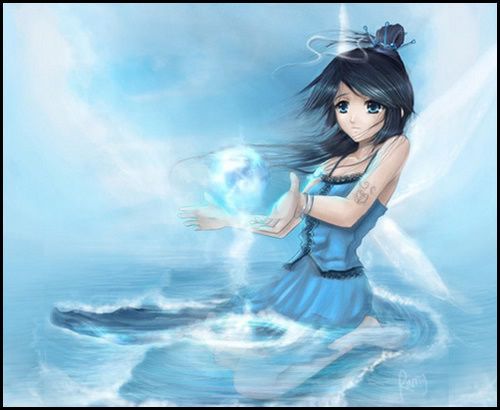
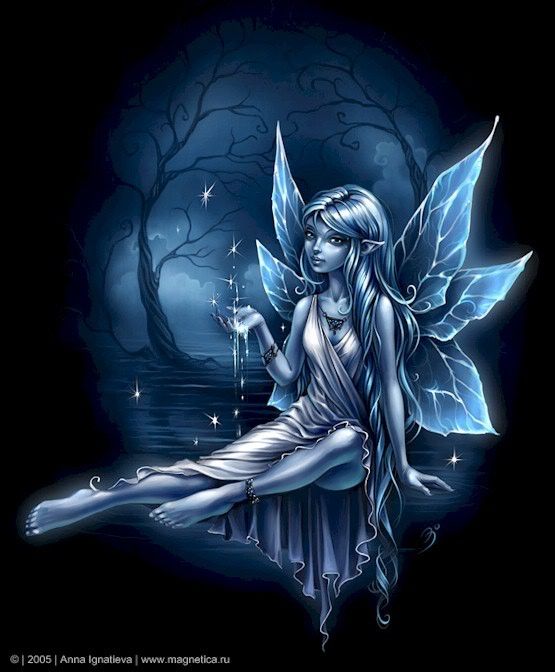
If I was a fairy tale character, I would be a water fairy. Ever since I was in elementary school, I wanted to be a marine biologist. I also enjoy swimming. As a water fairy, I would be able to fly to exotic places as well as get away when I want to be alone without being bothered.


Subscribe to:
Comments (Atom)
